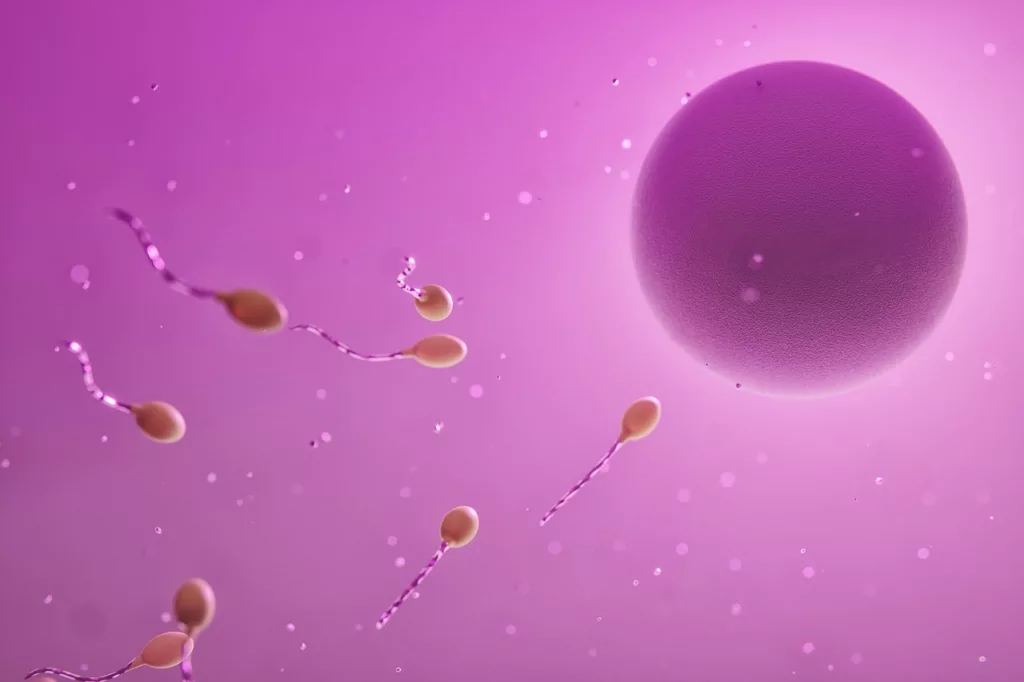
 By Marta Koblanska, February 24, 2025, 13:30 Poland’s time, photo: illustration of conception/fertilization, the flagellum of the sperm cell remains outside the ovum, thanks to videomediaart, Pixabay
The known rate of embryo defects is 13.2 percent; still, this rate is increasing as new mutant genes responsible for these defects are identified.
Human fertility and the stages of development have not been fully understood. Numerous genetic and environmental factors play a role in the successful formation of a healthy zygote, morula, blastocyst, and embryo, ultimately leading to a fetus and a child capable of living outside the womb.
Recent research from Fudan University in China, titled “Genetic Landscape of Human Oocyte/Embryo Defects,” published in ,,Cell Genomics”, sheds more light on this issue. The study highlights that both reproduction and infertility can be influenced by genetic factors to some extent. Approximately 47 percent of embryo defects are linked to specific gene mutations that primarily contribute to infertility and result in significant developmental challenges.
The first reported pathogenic gene associated with the most common and typical oocyte defects is TUBB8, which encodes a specific beta-tubulin protein found in primates, including humans. This protein plays a crucial role in spindle assembly during cell division. TUBB8 is involved in both mitosis (the division of somatic cells, which are non-reproductive cells) and meiosis (the division of gametes) at the early stages of organism development. It is essential for oocyte maturation, a process by which an immature sex cell, known as an oocyte, develops into an ovum in the ovary, with its release regulated by the Graafian follicle. Additionally, TUBB8 contributes to maintaining the correct structure of the cytoskeleton.
This process occurs after chromosomes are successfully transported to opposite ends of a cell, a movement that takes place during both mitosis and meiosis. While mitosis is essential for maintaining genetic stability and serves as a foundational step for further development, meiosis supports growth and differentiation. However, this does not imply that random mistakes during development cannot be self-corrected. The initial stage after conception, known as cleavage, occurs through mitosis. Nevertheless, if a cytoskeleton is not present to provide structural support, growth becomes very limited or even impossible.
In the study led by the Chinese scientists, which included 3627 patients in the cohort, the most common cases of defects represented oocyte defects (42,9 percent), among those 6,8 percent cases pertained to abnormal fertilization and 50,3 percent embryonic arrest. The contribution rate of tubulin protein to oocyte defects was approximately 10 percent, according to scientists.
Interestingly, both oocyte DNA fragmentation and sperm DNA fragmentation can lead to miscarriage, even though conception and some development occur. The explanation for this is very simple. A new human begins as a two-cell zygote formed from an egg (ovum) and sperm, which then divides into a four-cell stage and subsequently into a morula. During this process, which involves RNA and DNA, mistakes can happen. Furthermore, Chinese scientists have identified not only the previously defined gene set of 37 but also an additional 123 novel candidate genes that may be responsible for oocyte and embryo defects.
– Oocyte defects primarily included infertility resulting from the production of immature oocytes, including empty follicle syndrome, zona pellucida defects, oocyte maturation defects, morphological defects, and so forth. Abnormal fertilization was defined as the absence of normal zygotes (2PN) after IVF/ICSI, mainly manifested by multiple pronuclei or no pronuclei formation. Embryonic arrest was defined as the inability of embryos to develop into normal eight-cell embryos or blastocysts, as well as recurrent implantation failures of viable embryos, says Lei Wang, the lead researcher of the study.
Leave a Reply